

Erode to Tiruvannamalai Taxi
Distance
250 Kms
Duration
4.5 Hours
From
Starting ₹3500
Affordable one-way and round-trip taxi service from Erode to Tiruvannamalai. Book your ride with Raja Drop Taxi for a comfortable, safe, and reliable journey. We offer outstation trips at the most competitive rates.
- Well Maintained Cars
- Professional Drivers
- 24/7 Customer Support
- Transparent Pricing
Estimated Fare & Vehicle Options
* Fares are estimated based on a distance of 250 Kms. Round trips cover both directions plus driver bata. Toll gate fees, parking charges, and state permits are extra as actual. No hidden charges.
Vehicle Types & Km Charges
One-way drop fares include the driver — bata applies to round trips only. Minimum one-way booking 130 km. Toll gates, parking and inter-state permits are charged as actuals. Fares are indicative and may vary with the exact pickup and drop location.
Erode to Tiruvannamalai One Way Drop Taxi
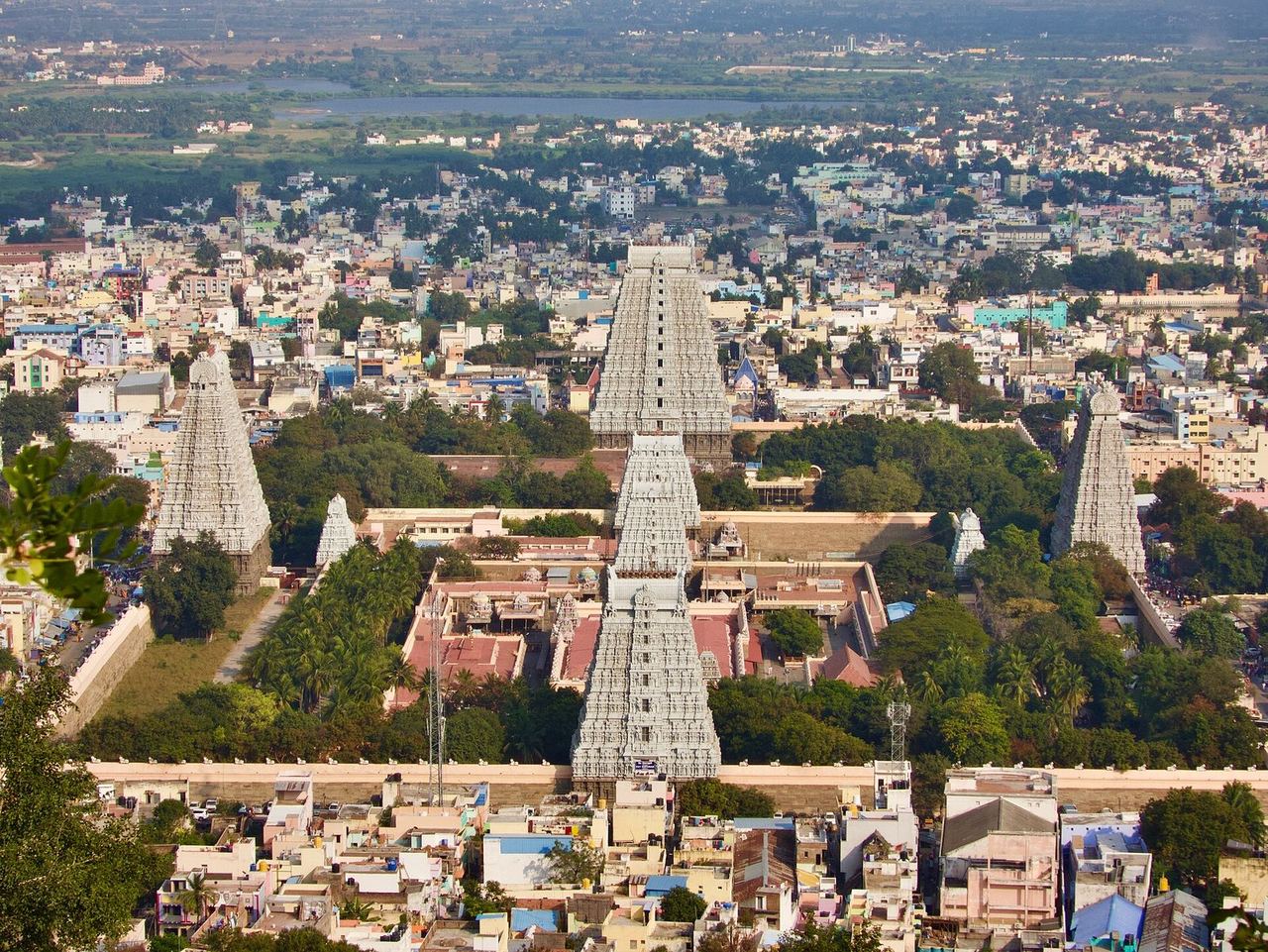
Book a Erode to Tiruvannamalai taxi with Raja Drop Taxi for darshan at the Arunachaleswarar Temple and the sacred Arunachala Girivalam. Daily one-way drops — you pay only for the one-way distance. Full-moon (Pournami) nights are the busiest; book a day ahead for guaranteed pickup.
Fare, Distance & Route
The Erode to Tiruvannamalai one way taxi fare starts around ₹3,300 for a Sedan (7-seater SUVs and Innova Crysta available for family pilgrimages). The 250 km journey takes about 4.5 hours via Salem and Harur. No inter-state permit on all-Tamil Nadu routes — tolls as actuals, no hidden charges.
Doorstep Pickup & Drop
Pickup anywhere in Erode — home, hotel, bus stand or railway station — and drop at the Arunachaleswarar Temple, the 14 km Girivalam path, Sri Ramana Ashram, Seshadri Ashram or your lodge.
Why Travelers Choose Raja Drop Taxi
- Pay one-way only — no return fare on drop taxi bookings.
- Doorstep pickup 24/7 — perfect for pre-dawn Girivalam starts.
- Verified drivers & clean AC cars — Sedans, SUVs and Innova Crysta.
- Transparent billing — only tolls and permits extra as actuals.
Book Your Tiruvannamalai Taxi Now
From the loom town to the mountain of fire
Erode's own names are workmanlike — turmeric capital, loom city, the powerloom and dyeing belt of the Kongu country — and Tiruvannamalai's is not: the hill of Arunachala is worshipped as Shiva himself in the form of fire. The 250 km between them carries one of the steadiest pilgrim flows in western Tamil Nadu, and it swells to a flood on every full moon. This page is for that trip: the Erode to Tiruvannamalai taxi, booked most often around a pournami date, a family function at the temple, or a quiet few days near the ashrams.
The demand is old and local. Weavers, traders and mill families from Erode, Bhavani, Gobichettipalayam and Perundurai have walked around Arunachala for generations; what has changed is only the vehicle, and a drop taxi that leaves from your own street beats fighting for a seat on a festival-week bus.
The road: Salem, then the Harur road to Chengam
The drive is 250 km and takes about four and a half hours. The first stage is the easy one: NH544 out of Erode past Sankagiri to Salem, fast four-lane all the way. From Salem the car turns north-east onto the Harur road, crossing hillier, quieter country along the edge of the Chitteri ranges to Harur and on through Chengam, from where the road runs straight at the hill — Arunachala is visible long before the town is.
Entering from the Chengam side has one pleasant consequence: you come in past Sri Ramanasramam on the southern edge of town before you ever reach the temple streets, which suits the many travellers whose first stop is the ashram rather than the sanctum.
Girivalam: fourteen kilometres around Arunachala
Girivalam — the barefoot, clockwise walk around the hill — is the reason most of our passengers make this trip. The path is about 14 km, ringed by the eight direction lingams (the Ashta Lingams) and countless smaller shrines and tanks, and on every full-moon night it fills with walkers — on the big pournamis, lakhs of them in a single night. Most people walk it in four to five hours at an unhurried pace.
The walk is done barefoot by custom and mostly at night, when the tar is cool and the hill stands against the moon. First-timers should carry only water and small change, dress lightly, and let the crowd set the pace — it is a moving river of people, and it does not hurry.
The two giant full moons: Chithra Pournami and Karthigai Deepam
Two dates tower over the calendar. Chithra Pournami, the full moon of the Tamil month of Chithirai in April–May, draws crowds counted in the tens of lakhs, with the administration laying on temporary bus stands around the town's edge to absorb the traffic. And Karthigai Deepam in November–December is the festival this town is famous for across India: at sunset on Deepam day the Maha Deepam is lit at the summit of Arunachala — a great cauldron of ghee whose flame is visible for many kilometres in every direction and is kept burning for days — while the ten-day festival fills every street below. Special buses run in their hundreds from across the state for it.
The dates move with the lunar calendar, so check the current year's girivalam calendar before fixing your trip — and then book the cab as soon as you fix it.
Planning around a full moon
On pournami days Tiruvannamalai reorganises itself. The girivalam path closes to vehicles, approach roads work one-way, and cars are held at drop points on the edge of the circuit rather than anywhere near the temple — your driver will know the current arrangement and put you down at the most useful gate. Expect the last few kilometres into town to be slow from the evening before the full moon through the following morning.
Two practical rules from years of running this route: book the taxi two or three days ahead of any pournami, earlier still for Chithra Pournami and Deepam, because every cab in the region is spoken for on those dates; and agree the return plan with us in advance, since a driver waiting overnight and a fresh pickup next morning are priced differently and both are possible.
The overnight pattern that works best
The trip most regulars settle on looks like this: leave Erode in the early afternoon, reach Tiruvannamalai by evening, take darshan or rest, and start the girivalam walk at night when the path is cool and the moon is up. Finish in the small hours, sleep for a few hours at a lodge or simply rest, and drive back to Erode next morning — home by lunchtime, with the whole observance complete inside twenty-four hours.
Booked as a round trip, the same driver holds the whole plan: he drops you at the path, parks where the police allow that night, and is reachable on the phone when you finish — which, at 3 am among a lakh of walkers, is worth a great deal. Night driving back is possible too, but after a 14 km walk we recommend the morning return; the fare logic does not punish you for sleeping.
Arunachaleswarar: the temple of the fire element
At the foot of the hill stands the Arunachaleswarar temple, one of the Pancha Bhoota Sthalams — the five great Shiva temples of the elements — and the shrine of Agni, fire, which is why the hilltop flame at Karthigai is not decoration but the point of the whole place. The complex is one of the largest temple compounds in India, its eastern Rajagopuram one of the country's tallest, and Annamalaiyar and Unnamulai Amman receive a queue that never really ends.
Ordinary-day darshan is comfortable in the early morning or late evening; on full-moon and festival days allow hours rather than minutes, and treat the temple and the girivalam as two separate undertakings rather than one hurried evening.
Ramana Maharshi and the quieter Tiruvannamalai
Not everyone comes for the crowds. Sri Ramanasramam, where Ramana Maharshi lived until 1950, sits on the Chengam road at the foot of the hill, and it anchors a quieter Tiruvannamalai of meditation halls, cave shrines on the hillside — Virupaksha and Skandashramam up the path behind the ashram — and long-stay visitors from across the world. Erode passengers bound here often want a plain drop and silence for the last half hour of the drive, and drivers on this route understand that perfectly.
If your stay mixes both — ashram mornings and a girivalam night — say so when booking; the drop order matters less than knowing your dates sit clear of a major pournami, or squarely on one, whichever you intend.
Booking ahead: dates, spellings and the drop
You will see the town written Tiruvannamalai, Thiruvannamalai and Tiruvanamalai; the temple records themselves vary, and every spelling books the same seat in the same car. A one way drop taxi from Erode charges for the 250 km actually driven — not the car's empty run home — with tolls on the Salem stretch charged as actuals and one driver for the whole way. Pickups work from anywhere in the Erode belt: the town itself, Bhavani, Perundurai, Gobichettipalayam or a mill gate on the bypass.
The only real advice this page insists on: fix your date against the girivalam calendar first, then call. On an ordinary weekend a day's notice is ample; on a full moon, the cars go to those who booked early.
💡 Journey Highlights & Scenic Spots
- Arunachaleswarar Temple and the 14 km Girivalam path
- Sri Ramana Maharshi Ashram and Skandashram caves
- Karthigai Deepam and Pournami nights — book in advance
☀️ Best Time to Travel
November-December (Karthigai Deepam) and full-moon nights are peak; October to March is the most pleasant season. We operate year-round.
Things to see in Tiruvannamalai
More Taxi Routes from Erode
Taxi to Tiruvannamalai from Other Cities
📞 Need Assistance?
Get instant support or book over phone/WhatsApp with our customer representative.
Call +91 86828 41783 WhatsApp Booking